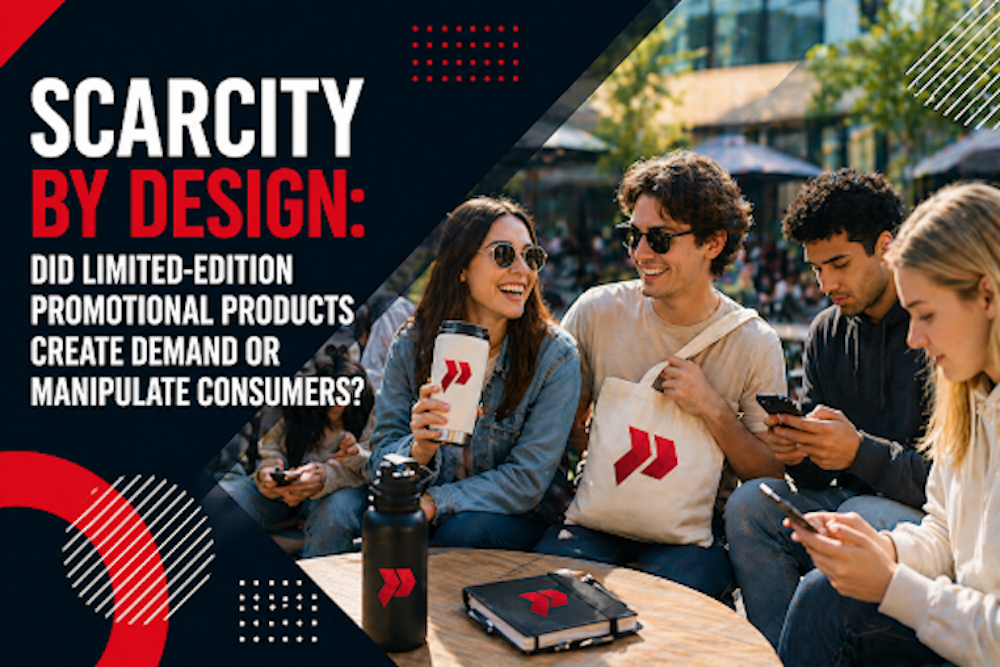
Marketing has always relied on psychology. Brands study what attracts attention, motivates purchases, and keeps customers engaged. Among the most powerful strategies in modern advertising is scarcity—the idea that when something is rare, people value it more. This principle has become especially common in the world of promotional products, where businesses release limited-edition merchandise, exclusive branded giveaways, or “first 100 customers” rewards to generate urgency and excitement.
From collectible branded tumblers and apparel to exclusive event swag bags and seasonal merch drops, scarcity-based promotional campaigns can create buzz and drive immediate action. Customers often rush to participate because they believe they may miss out forever if they wait too long.
But this raises an important question: Do limited-edition promotional products create genuine demand, or do they manipulate consumers through fear of missing out (FOMO)?
The answer is not entirely simple. Scarcity marketing can be a legitimate way to build enthusiasm, reward loyal customers, and create memorable brand experiences. At the same time, when overused or used deceptively, it can pressure buyers into impulsive decisions they later regret.
This article explores how scarcity works in promotional marketing, why brands use it, where it crosses ethical lines, and how businesses can apply limited-edition merchandise responsibly.
What Is Scarcity Marketing?
Scarcity marketing is a strategy where brands intentionally limit access to a product, service, or offer in order to increase perceived value and urgency.
Common examples include:
- Limited-edition promotional merchandise
- First 100 customers receive a free gift
- Exclusive VIP swag for early attendees
- Seasonal branded products available “while supplies last”
- One-day promotional giveaways
- Countdown-based online merch drops
- Invite-only promotional product launches
The underlying message is simple: Act now, or lose your chance.
This works because consumers naturally place greater value on items that seem rare or difficult to obtain.
In the promotional products industry, scarcity is often used to transform ordinary branded items into sought-after experiences.
Why Scarcity Works So Well
Scarcity is rooted in psychology. People are more likely to act quickly when they believe supply is limited.
Several factors explain why scarcity marketing is so effective.
Fear of Missing Out (FOMO)
One of the strongest motivators in modern consumer behavior is FOMO. Customers do not want to miss opportunities that others enjoy.
If a company offers an exclusive giveaway to the first 100 people, many consumers participate simply because they do not want to be left behind.
Perceived Value
When an item is rare, people often assume it is more valuable.
A limited-edition branded hoodie may feel more desirable than a standard version available year-round.
Social Status
Owning something exclusive can signal insider status or loyalty.
Consumers often enjoy sharing photos of rare promotional merchandise on social media, increasing visibility for the brand.
Urgency Reduces Delay
Many people postpone purchases indefinitely. Scarcity shortens decision time by forcing action.
Instead of “I’ll think about it later,” customers decide now.
How Brands Use Limited-Edition Promotional Products
Many companies use scarcity creatively to generate attention and increase customer engagement.
1. First 100 Customers Giveaways
Retailers often reward early buyers with exclusive merchandise.
Examples:
- Free branded tote bags for first visitors
- Exclusive mugs for opening-day customers
- Limited shirts for grand opening attendees
This tactic can drive foot traffic and create event momentum.
2. Seasonal Merchandise Drops
Brands release products tied to holidays, sports seasons, or special events.
Examples:
- Summer branded beach kits
- Holiday tumblers
- Championship celebration gear
Because availability is temporary, customers feel motivated to buy immediately.
3. Influencer or Collaboration Merch
Collaborative products between brands and creators often rely on scarcity.
Limited quantities make the promotion feel special and collectible.
4. VIP Event Swag
Trade shows, conferences, and corporate events frequently use exclusive merchandise for attendees.
This rewards participation while increasing perceived value of the event itself.
5. Loyalty Rewards
Some brands offer premium promotional items only to repeat customers or members.
Examples:
- Limited member-only backpacks
- Anniversary gifts for subscribers
- Early-access merchandise
This encourages retention and repeat engagement.
The Benefits of Scarcity-Based Promotional Products

When used honestly and thoughtfully, scarcity can provide real value for businesses and customers.
Increased Demand
Limited-edition promotional products often create spikes in traffic, signups, and sales.
Customers are more likely to act when a clear deadline or quantity limit exists.
Stronger Brand Buzz
Exclusive drops create conversation. Consumers share rare items online, discuss availability, and spread awareness organically.
This can turn promotional products into viral marketing assets.
Higher Perceived Quality
Even standard products can feel premium when released in limited quantities with thoughtful design.
Scarcity can elevate the brand image.
Better Event Attendance
Exclusive giveaways often improve turnout at launches, conferences, pop-ups, and community events.
Rewarding Loyal Customers
When used fairly, limited-edition items can make existing customers feel appreciated.
When Scarcity Becomes Manipulation
While scarcity can be effective, it can also cross ethical lines when used deceptively or aggressively.
Fake Scarcity
One common problem is pretending products are limited when they are not.
Examples:
- “Only 3 left!” when inventory is plentiful
- “Last chance” promotions repeated weekly
- “Limited edition” products restocked repeatedly
This erodes trust quickly.
Pressure Selling
Some promotions are designed to overwhelm rational decision-making.
Examples:
- Short countdown timers everywhere
- Constant alerts that stock is vanishing
- Artificial panic messaging
Customers may buy out of stress rather than genuine interest.
Exploiting Younger Audiences
Scarcity tactics can be especially influential on younger consumers who are highly active online and socially driven.
Brands targeting teenagers or children with FOMO-heavy campaigns face greater ethical scrutiny.
Encouraging Overconsumption
If consumers buy unnecessary products simply because they are rare, scarcity can contribute to wasteful behavior.
This is especially concerning when promotional merchandise is cheaply made or disposable.
Does Scarcity Build Excitement or Exploit FOMO?
The answer depends on execution.
Scarcity Builds Excitement When:
- Supply limits are real and transparent
- Products are thoughtfully designed
- Customers receive genuine value
- Promotions celebrate milestones or communities
- Demand grows naturally through interest
Scarcity Exploits Consumers When:
- Limits are fake or misleading
- Urgency messaging creates panic
- Products are low-value impulse buys
- Promotions rely on emotional pressure
- Customers feel tricked afterward
Ethical scarcity creates anticipation. Manipulative scarcity creates regret.
Real-World Examples of Scarcity in Promotional Marketing
Many industries use this strategy in different ways.
Coffee Shops and Food Chains
Brands often release seasonal cups, mugs, or loyalty gifts.
These campaigns can create excitement and repeat visits, but overhype may cause disappointment if supply is too small.
Apparel Brands
Streetwear companies are famous for limited drops. Promotional merch often sells out quickly, increasing prestige.
However, some critics argue this model normalizes exclusion and resale culture.
Tech Companies
Launch-day freebies such as branded accessories or early adopter gifts encourage fast purchasing decisions.
When products are useful, customers often respond positively.
Events and Conferences
Exclusive attendee merchandise can make events feel more valuable and memorable.
This works best when attendees receive real quality items rather than cheap novelty products.
The Role of Social Media in Scarcity Marketing
Social media has amplified scarcity dramatically.
Years ago, limited merchandise depended on local awareness. Today, brands can create instant urgency globally.
Countdown Campaigns
Brands tease drops with countdown clocks and previews.
User-Generated Hype
Customers post sold-out items, making others want them more.
Influencer Exclusivity
Influencers receiving rare branded products create aspirational demand.
Real-Time Sellouts
Seeing items disappear live increases urgency for future promotions.
While effective, this can intensify impulsive buying behavior.
How Businesses Can Use Scarcity Ethically
Scarcity itself is not unethical. Misuse is the problem.
Here are responsible ways to implement limited-edition promotional campaigns.
1. Be Honest About Quantities
If only 100 units exist, say so truthfully.
Transparency builds credibility.
2. Offer Real Value
Make sure the promotional item is useful, attractive, or meaningful.
Examples:
- Quality tumblers
- Premium notebooks
- Sustainable tote bags
- Well-designed apparel
3. Avoid Constant Manufactured Urgency
If everything is always “limited,” customers stop believing it.
Use scarcity selectively.
4. Reward Loyalty, Not Just Speed
Consider reserving some merchandise for loyal customers instead of rewarding only whoever clicks fastest.
5. Prevent Waste
Do not mass-produce cheap “exclusive” products that quickly get discarded.
Use quality materials and sustainable sourcing.
6. Keep Messaging Respectful
Encourage participation without panic-driven language.
Better message:
“Available while our special anniversary collection lasts.”
Worse message:
“Buy now before everyone else gets it and you lose forever!”
Scarcity and Consumer Trust
Trust is the most valuable long-term asset in marketing.
A scarcity campaign may generate immediate sales, but if customers feel manipulated, future loyalty declines.
Consumers remember:
- False sellouts
- Endless “last chance” emails
- Cheap limited-edition products
- Broken promises about exclusivity
On the other hand, customers also remember:
- Genuine surprise gifts
- Thoughtful limited collections
- Honest communication
- High-quality branded merchandise
Short-term urgency should never damage long-term trust.
Can Scarcity Be Sustainable?
Yes—if handled thoughtfully.
Many businesses now combine exclusivity with environmental responsibility.
Examples:
- Limited runs of recycled apparel
- Numbered reusable drinkware collections
- Seasonal eco-friendly gift boxes
- Small-batch premium sustainable merchandise
This reduces overproduction while keeping demand high.
Instead of manufacturing excess inventory, brands produce smaller intentional batches.
That can benefit both profitability and sustainability.
How Small Businesses Can Use Scarcity Without Feeling Manipulative

Scarcity is not only for giant brands. Small businesses can use it effectively with authenticity.
Local Café Example
Offer first 50 guests a reusable branded mug during a grand reopening.
Boutique Example
Launch a small seasonal tote bag collection using local artists.
Service Business Example
Give the first 25 new clients premium onboarding kits.
Nonprofit Example
Provide limited awareness merchandise tied to a fundraising milestone.
When rooted in real community engagement, scarcity feels celebratory rather than exploitative.
Questions Businesses Should Ask Before Running a Scarcity Campaign
Before launching a limited-edition promotional product, ask:
- Is the scarcity genuine?
- Does the product provide real value?
- Will customers feel excited or pressured?
- Does this align with our brand values?
- Are we building loyalty or just chasing quick sales?
- Could this create waste or disappointment?
Good answers usually lead to better campaigns.
The Future of Scarcity Marketing
Consumers are becoming more aware of marketing psychology. That means lazy scarcity tactics may lose power over time.
Future winners will likely focus on:
- Authentic exclusivity
- Better product quality
- Sustainability
- Community-based rewards
- Personalized limited offers
- Transparent communication
Scarcity alone is no longer enough. Trust and relevance matter more.
Final Thoughts
Limited-edition promotional products can absolutely create demand. They generate urgency, conversation, and excitement when executed honestly. They can reward loyal customers, energize events, and make branded merchandise feel special.
But scarcity can also manipulate consumers when it relies on fake limits, emotional pressure, or low-value impulse products designed to exploit FOMO.
So, did scarcity by design create demand or manipulate consumers?
The truth is: it can do both.
The deciding factor is not the tactic itself—it is the intention behind it.
Businesses that use scarcity with transparency, quality, and respect can build stronger relationships and memorable brand moments. Those that abuse it may gain quick wins but lose trust in the long run.
In modern marketing, urgency may drive clicks. But integrity builds brands.