Well-chosen promotional materials give your customers practical value while helping them remember your business. This guide helps you compare options, set a budget, and select marketing products that support your goals. Matching each item to your audience and occasion can make your choice more meaningful.
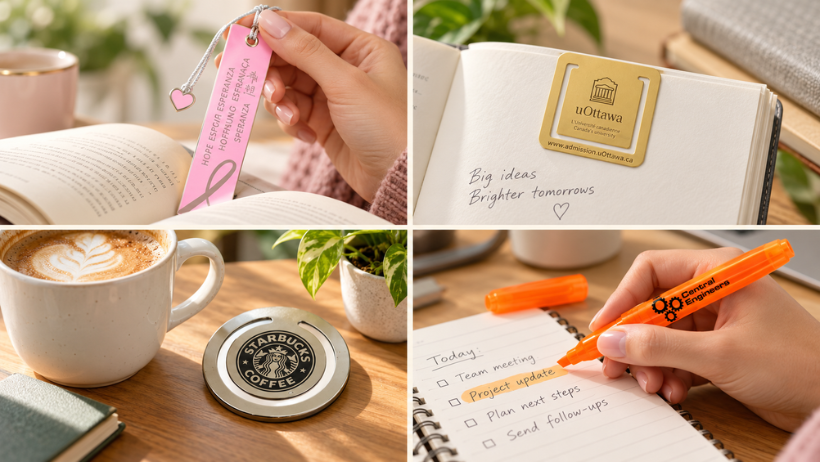
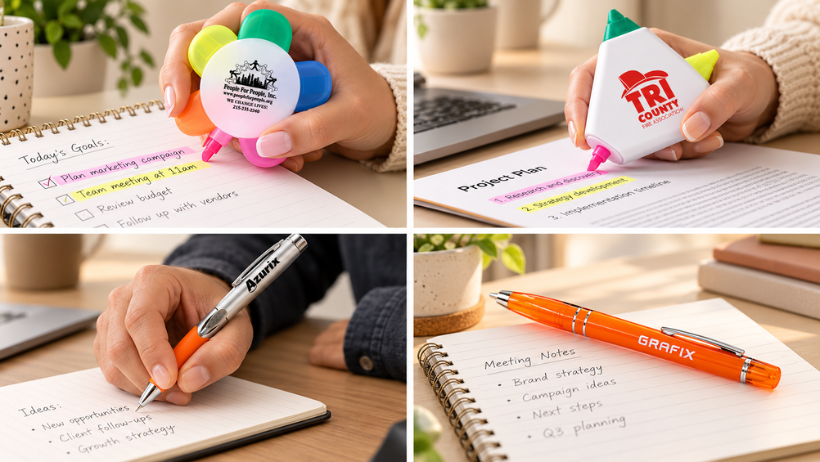
Whether you are considering branded pens, tote bags, drinkware, or notebooks, choose products that fit your customers’ daily routines. Check quality, printing options, minimum quantities, and delivery timelines before ordering. A clear message and readable logo help your branding stand out without overcrowding the design. Promotional Products Canada can assist with product selection, branding, and delivery to help you plan your next campaign.
What Can You Use to Promote Your Business?
Promotional materials are items you use to communicate your business message, introduce an offer, or keep your brand visible. They include printed pieces, such as brochures and business cards, alongside branded merchandise, such as bags, mugs, and pens.
Each format serves a different purpose. A brochure explains your services, while a reusable bottle gives someone a practical item carrying your logo. Understanding the importance of branding in business can also help you choose materials that support a consistent brand identity.
Your starting point should be the action you want someone to take. That might be visiting your website, requesting a quote, attending an event, or remembering your business when a need arises.
Start With Your Customer and Campaign Goal
Think About Everyday Use
Picture the person receiving your item. Consider their work setting, routines, interests, and how they will carry it home.
A bulky mug may be inconvenient for someone travelling with limited luggage. A compact notebook could suit that same person better.
Ask yourself whether the item would remain useful without your logo. If the answer is no, reconsider the product before spending money on decoration.
Choose One Main Outcome
Set a clear purpose for the campaign. You might want quote requests, event registrations, repeat purchases, or stronger relationships with existing customers.
For example, a service brochure can explain an unfamiliar offer, while a branded pen keeps contact details nearby. Together, they help your customer understand your offer and remember your business.
Avoid placing several competing messages on one small item. Give your customer one clear next step.
Compare Your Options Before Ordering
Printed materials and branded merchandise offer different benefits depending on how you plan to use them in your marketing campaign.
Printed materials, such as brochures, flyers, and business cards, are useful for sharing detailed information about your products or services. They work well at trade shows, networking events, and customer meetings where you want to communicate specific offers or contact details.
Branded merchandise, including tote bags, notebooks, pens, and drinkware, offers practical value while keeping your business visible during everyday activities. These products may be more suitable for customer appreciation programs, employee gifts, and promotional giveaways.
When comparing options, consider portability, available branding space, durability, storage requirements, and how you plan to distribute each item. Before placing an order, confirm product quality, customization options, minimum quantities, stock availability, and delivery timelines with your supplier.
Plan Your Budget Around the Complete Order
The lowest advertised unit price may leave out costs that affect your final bill. Request an itemized quote before comparing suppliers.
Check for:
- Product quantity and price breaks
- Artwork preparation and setup charges
- Decoration locations and colours
- Samples and proofs
- Packaging and delivery
- Applicable taxes
- Rush production, if available
A larger quantity can reduce the per-item price while increasing your total spend. Buy for a realistic distribution plan rather than ordering extra solely to reach a discount.
Choose Quality Your Customers Will Appreciate
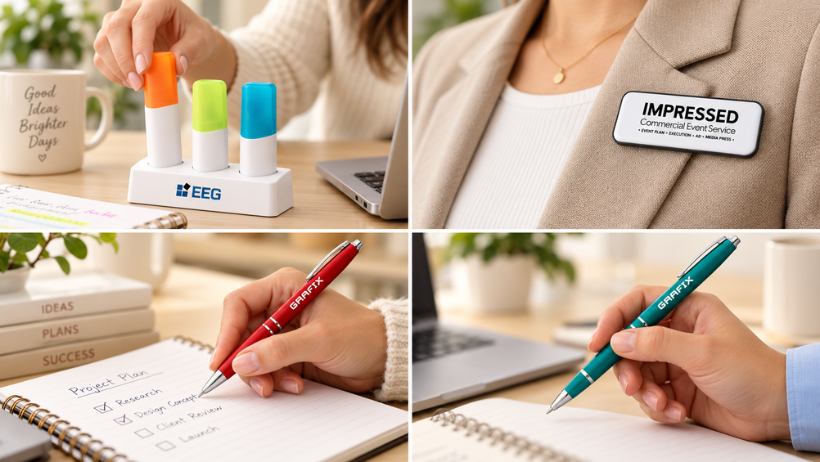
Choose promotional items your customer can use regularly, such as a reliable pen, a sturdy bag, or a practical bottle. Consider whether the product fits their routine and provides lasting value.
Before ordering, request a sample to check its quality. Test the pen, inspect the bag’s stitching, or check that the bottle lid closes securely. Confirm whether the sample includes your branding, check its cost, and ask how the approval process may affect your production timeline.
Choosing Materials With Additional Features
Ask Specific Questions About Materials
If environmental considerations matter to your customer, ask for precise information. Check the stated recycled content, expected durability, packaging, and any supporting documentation.
Select reusable products that meet your customers’ needs and provide practical value rather than relying solely on general environmental claims.
For Canadian-made options, ask where the item is manufactured and where it is decorated. Those can be different locations.
Personalize Where It Adds Value
Personalization can make a promotional gift feel more thoughtful and meaningful to the recipient. A notebook personalized with the recipient’s name may suit a small employee welcome program better than a large public giveaway.
Verify recipient names, handle personal information carefully, and approve the artwork before production. Confirm how individual customization affects cost and timing.
Make QR Codes Easy to Use
A QR code can connect a printed card or suitable product surface to an offer, booking page, or useful resource. Explain what your customer will find after scanning.
Test the code at its final printed size and on the actual surface where possible. Curved products, glare, and low contrast can make scanning difficult.
Keep the destination page active for the expected life of the item.
Put Together Materials That Work as a Set
The following examples illustrate campaign planning. They are hypothetical scenarios, not reported client results.
Your First Trade Show
Imagine you are introducing a business service at a Toronto exhibition. A clear banner can attract visitors, a concise brochure can explain your services, and a practical giveaway can help attendees remember your business.
You could choose branded notepads for attendees who take notes during sessions. Add a clear website address rather than trying to fit your entire service list onto the cover.
Track meeting requests through a dedicated event landing page. This gives you something more useful to review than the number of items handed out.
Your Employee Welcome Kit
If you are welcoming a small team, consider a notebook, drinkware, and a short welcome card. Prioritize consistent quality and practical use.
Ask about individual packing and delivery if employees work in different locations. Those details can affect both the budget and the preparation time.
Prepare Artwork and Delivery Details
Before approving production, check that your logo remains clear at the actual decoration size. Fine lines, small text, and colour gradients may need adjustments for particular printing methods.
Review:
- Logo version and file requirements
- Product colour and decoration colour
- Print position and dimensions
- Website addresses, spelling, and contact information
- Approved quantities and size breakdowns
- Delivery address and required arrival date
For an event in Toronto, plan your order timeline backward from the date you need to receive and inspect your materials. Confirm production time separately from transit time and allow room for proof revisions.
For bilingual audiences, decide whether English and French wording is appropriate. Have both versions reviewed before approving the artwork.
Measure What Happens After Distribution
Choose a tracking method that aligns with your campaign goal. A dedicated website link, QR code, or offer code can help you identify responses.
Monitor item distribution, relevant enquiries, quote requests, and completed purchases where possible. Ask your sales team to note how new contacts discovered your business.
Review enquiry quality and resulting sales alongside campaign costs. A response alone does not show whether your campaign was profitable.
Frequently Asked Questions
Which items work best for a small business?
The best promotional items depend on your target audience, marketing goals, and available budget. Branded pens, notebooks, tote bags, and drinkware are practical options for everyday use. If your business needs to explain specific services, brochures or printed handouts may also be useful. Focus on products that provide value and support your message.
How do printed materials differ from branded merchandise?
Printed materials, such as brochures, flyers, and business cards, primarily communicate information about your products, services, or offers. Branded merchandise, including mugs, bags, and pens, provides practical items that display your business name or logo. Both can support marketing campaigns, but their effectiveness depends on your audience, distribution method, and intended purpose.
How many items should you order?
Start by estimating how many people you expect to reach through your campaign, event, or promotional activity. Consider your supplier’s minimum order quantities, available storage space, and overall budget. Ordering a small additional quantity may help cover unexpected demand, but avoid purchasing excessive stock that may remain unused or become outdated.
How early should you place an order?
The ideal ordering timeline depends on the product, customization method, quantity, and delivery destination. Allow enough time for artwork preparation, proof approval, production, and shipping. If you need promotional materials for a scheduled event, confirm the estimated delivery date with your supplier and include additional time to inspect the items before distribution.
Can you place an order on a limited budget?
Yes. Businesses with limited budgets can focus on affordable promotional items that offer practical value. Compare available products, minimum quantities, customization charges, and delivery costs before ordering. Rather than selecting several inexpensive items, consider investing in one useful product that suits your audience and supports your campaign goals.
Choose Materials With a Clear Purpose
Choose a practical item that communicates your message clearly and fits your distribution plan. Consider your customer’s needs, review the total cost, and confirm all details before production.
Need help choosing promotional materials for your next campaign? Contact Promotional Products Canada at 416-739-5100 or visit promotionalproducts.ca to explore available products and discuss your customization needs.