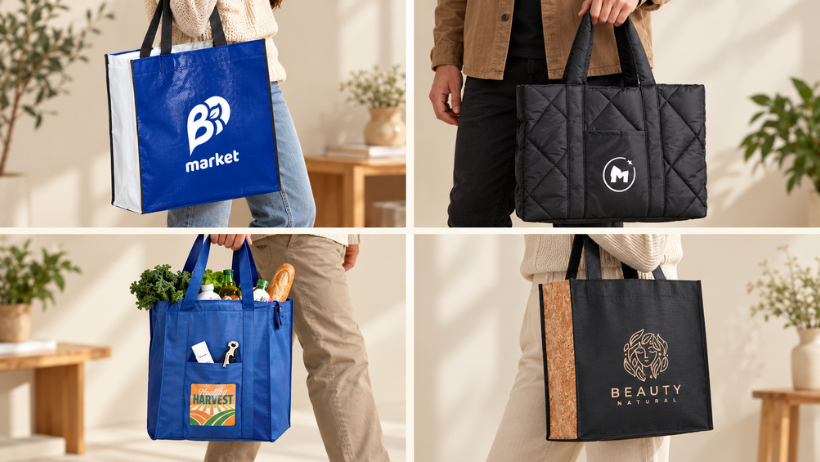
A promotional tote bag should do more than carry your logo. It should accommodate the items your recipients need to carry, be comfortable to use, and fit your budget. Consider whether the bag will be used for shopping, commuting, or event giveaways, as each purpose calls for different sizes and features.
Check handle length, stitching, and the recommended carrying capacity to assess its suitability. Review the available print area so your design remains clear and easy to read. This guide helps you compare materials, construction, printing, and ordering requirements so you can choose branded merchandise with a clear purpose.
Start With Your Recipient and Purpose
Before choosing colours or artwork, decide who will receive your bag and when they will use it. A conference attendee carrying brochures needs something different from an employee carrying lunch and a notebook.
For a Toronto trade show, consider the size of your handouts and how long your visitor will carry them. For a customer gift, consider whether the bag will fit naturally into shopping trips or daily errands.
Write a short brief covering your audience, intended contents, quantity, budget, and delivery date.
Compare Promotional Tote Bag Materials
Material affects a tote bag’s appearance, care, printing, and feel, but construction matters too. For everyday gifts and simple designs, consider cotton and check its fabric weight, seams, and care instructions; for a more substantial feel, consider canvas and review the handle attachment and finished bag weight.
Non-woven polypropylene may suit lightweight event giveaways, while polyester may work well for foldable bags and travel use, provided you check material thickness, supported load, and print compatibility.
If your order requires documented sourcing, consider recycled fabric and request evidence of its recycled content rather than choosing solely from a fabric name or photograph.
Cotton and Canvas
Canvas describes a fabric construction rather than a guaranteed fibre composition. Ask whether your chosen canvas bag contains cotton, polyester, or a blend.
Compare fabric weight alongside stitching and handle construction. A heavier fabric alone does not establish how much weight the finished bag can safely carry.
Non-Woven and Polyester
Non-woven bags may suit short event use, while polyester options can offer compact storage. Ask about the specific product rather than assuming every bag within either category performs alike.
If folding matters, check how the decorated bag packs away. A large print area or stiff decoration can affect that experience.
Check Size, Handles, and Construction
Product dimensions deserve more attention than a catalogue photograph. Check width, height, and depth against the items you intend to distribute.
A gusset adds depth at the base or sides, which can help accommodate bulkier contents. Confirm whether listed dimensions refer to the bag body and whether handle measurements are provided separately.
Review these details before ordering:
- Handle length and comfort when carried.
- Reinforcement around handle attachment points.
- Seam quality and the shape of the base.
- Pockets or closures your recipient needs.
- Any stated load limits and care requirements.
Request a sample when fit or construction matters. Fill it with your planned contents and assess how comfortably it carries them.
For example, a flat tote that fits a brochure may struggle to hold a boxed gift neatly. Checking the contents first can prevent an unsuitable purchase.
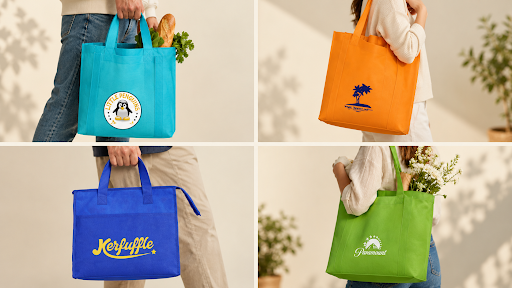
Match Your Logo to the Printing Method
Your logo should remain readable at the imprint size. Small lettering, fine lines, and low contrast can make an otherwise attractive design difficult to see.
Check the available printing method for the bag you choose. Screen printing, digital printing, transfers, and embroidery have different requirements, and availability depends on the fabric and supplier.
A simple design may suit screen printing, while detailed artwork may need another method. Embroidery also needs suitable construction and careful attention to backing and placement.
Ask which printing methods and artwork preparation services are available for your selected tote bag. Confirm the requirements before submitting your design.
Review Your Proof Carefully
Check spelling, logo proportions, imprint dimensions, placement, and contrast. Review the measurements rather than judging only from a large on-screen preview.
Ask whether colour matching is available and how the fabric may affect the finished appearance. A digital proof shows layout, but it cannot fully demonstrate texture or exact printed colour.
Keep the approved proof and written specifications with your order records. They provide a useful reference if you need to discuss the delivered merchandise.
Assess Sustainability Claims With Evidence
A reusable bag can be a practical choice when your recipient uses it regularly. However, the word reusable alone does not establish a lower overall environmental impact.
Before ordering, ask for evidence supporting any environmental claims, including fibre composition, recycled content, recognised certification, packaging, and care instructions.
Check that the evidence applies to your selected bag. A supplier’s general sustainability statement may not describe every product in its catalogue.
Consider quantity as well. Choose an amount your audience is likely to use rather than ordering excess stock solely for a lower unit price.
Promotional Tote Bag Ideas for Your Next Campaign
When planning your tote bag order, consider recycled materials with supporting documentation, practical designs, and customization that suits your recipient. Use these ideas to compare options based on your audience, budget, and intended use.
Documented Recycled Materials
Look for specific recycled-content information instead of broad green language. Ask which parts of the bag contain recycled material and whether the stated percentage covers the whole product.
Designs for Regular Use
A comfortable bag with appropriate capacity can fit into your recipient’s routine. Assess the handles, construction, and care requirements alongside its appearance.
QR Codes With a Clear Purpose
A QR code can link your bag to an event schedule, a useful resource, or a product page. Test the printed code on the actual fabric and keep the destination useful after the campaign.
Coordinated Welcome Kits
A tote can hold a notebook, bottle, and welcome materials together. Check the completed kit’s dimensions and weight before approving the bag.
Compare the Full Cost of Your Order
Compare written quotes for equivalent products and decoration. A lower unit price may reflect a different quantity, fabric weight, imprint size, or number of printed colours.
Ask whether the total includes setup, artwork preparation, printing, additional imprint locations, packaging, shipping, and applicable taxes.
Minimum quantities can vary by product and customization. Check whether different bag colours can share an order minimum or require separate production runs.
Consider ordering a few extra bags for replacements or late attendees, depending on your event needs. However, avoid ordering excessive quantities, as surplus bags can increase storage costs.
Plan Delivery for Your Canadian Event
Give your supplier the date you need the bags in hand. Allow time to inspect, pack, and distribute them before your event starts.
Confirm stock, proof approval deadlines, production time, and shipping separately. Ask what happens if your preferred colour becomes unavailable and whether substitutions require approval.
For delivery to a Toronto venue, provide receiving hours, a contact person, and any labelling requirements. For another province, confirm transit arrangements and venue restrictions.
Review the ordering FAQs before purchasing, then clarify any details specific to your order. Written confirmation is especially useful when your schedule is tight.
A Practical Tote Bag Planning Example
Suppose you are preparing 150 welcome bags for a Toronto conference. Each bag will contain a notebook, programme, and boxed snack.
You compare two samples, load each with those contents, and check handle comfort. You then request matching quotes with the same quantity and imprint requirements.
Before approving production, you review the proof and confirm venue delivery details. This hypothetical example illustrates the purchasing process, not a completed client case study.
After the event, record any issues with the bags or delivery. Recipient feedback can help you decide whether to reorder the same product.
Frequently Asked Questions
What Is a Promotional Tote Bag?
It is a tote customized with your logo, business name, or campaign message. You can use it for events, customer gifts, retail purchases, or employee welcome materials.
Which Material Should You Choose?
Choose according to your contents, expected use, printing needs, and budget. Compare finished samples because material names alone do not establish comfort, strength, or quality.
Can You Wash a Branded Tote Bag?
Follow the care instructions for the specific bag and decoration. Some fabrics or printing methods require limited cleaning, and machine washing may affect shape or artwork.
What Is the Minimum Order Quantity?
The minimum depends on the product and customization requirements. Check the selected item and ask whether colour variations or separate artwork versions change the minimum.
Can You Request a Sample Before Ordering?
Contact the website to ask whether samples are available for your selected tote bag. Confirm any applicable charges and whether the sample is blank or decorated.
Choose Your Tote With Clear Requirements
Choose a promotional tote bag that suits your audience, branding requirements, and budget. Explore the available options and request a quote based on your preferred materials, quantity, artwork, and delivery deadline.
Contact Promotional Products Canada to discuss your branded merchandise order. Call 416-739-5100 or email quotes@promotionalproducts.com with your quantity, preferred bag, artwork, delivery location, and required date.