For decades, the custom stress ball has been one of the most recognizable promotional products. It is simple, affordable, easy to brand, and useful enough to keep on a desk. Businesses have handed them out at conferences, health fairs, employee events, school programs, and trade shows because they serve a clear purpose: give people something small, tactile, and memorable.
But today’s desk toy category has changed.
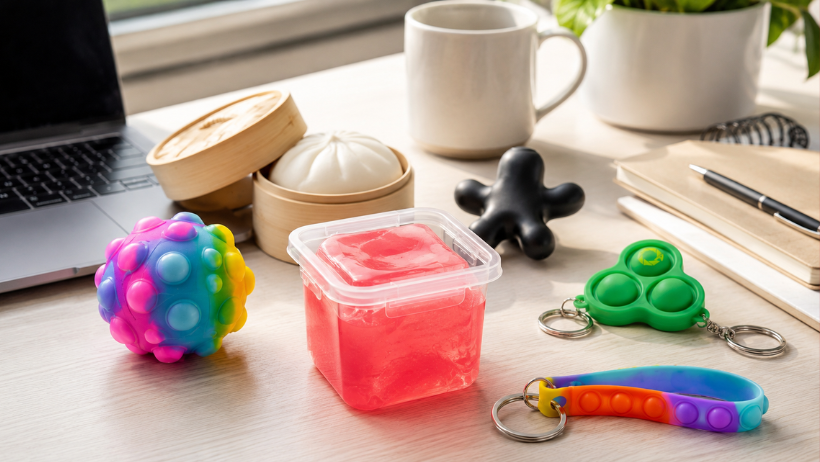
People are no longer only reaching for foam stress balls. They are using slime, sensory putty, squishies, fidget toys, textured cubes, poppers, magnetic sliders, and other hands-on tools that offer a more interactive experience. These products are not just “toys.” They reflect a larger shift in how people think about stress relief, focus, and everyday wellness.
That is where slime comes in.
Slime has moved far beyond the kids’ craft table. It has become part of the larger sensory product trend, boosted by short-form video, ASMR content, desk setups, self-care routines, and the growing demand for products that feel personal and calming. Slime videos remain popular because they combine texture, movement, color, and sound in a way that feels satisfying to watch and even better to touch. ASMR and sensory content have become major online formats, with research noting that ASMR videos often rely on rich visual, auditory, and tactile-style experiences to create feelings of relaxation and enjoyment.
For brands, this creates an opportunity. A branded slime jar or custom sensory desk toy can do what the classic stress ball has always done, but in a more modern, social-media-friendly, and memorable way.
From Foam Stress Balls to Sensory Swag
The traditional promotional stress ball became popular because it checked several important boxes. It was inexpensive. It was easy to customize. It worked for almost any industry. It could sit on a desk for months, keeping a logo visible long after an event ended.
That value still matters.
But modern audiences are surrounded by more branded products than ever. A pen, mug, tote, or stress ball can still be effective, but only when it feels useful or interesting enough to keep. This is why brands are exploring sensory promotional products that feel more engaging than a standard giveaway.
Slime offers something the traditional stress ball does not: transformation.
A stress ball can be squeezed. Slime can be stretched, folded, pulled, poked, swirled, scented, colored, glittered, and packaged in a way that feels customized to the brand experience. It gives people a moment of interaction, not just an object to receive.
That difference matters.
A giveaway becomes more memorable when the recipient physically interacts with it. Slime creates a small pause in the day. It gives someone something to do with their hands during a break, between meetings, or while sitting at a desk. This makes it a strong fit for office giveaways, employee wellness kits, and conference swag.
Why Slime Works as a Desk Toy
The modern workplace is filled with screens, notifications, deadlines, and constant mental switching. People are often looking for small ways to reset without leaving their desk. That is why desk toys for stress relief have become more popular across both office and remote work environments.
Slime fits this behavior because it is tactile and low-pressure. It does not require instructions, batteries, or a learning curve. A person can open the jar, stretch it for a few moments, and put it away.
Compared with traditional stress balls, slime offers a more varied sensory experience. Texture, resistance, softness, stretch, scent, and color all contribute to the product’s appeal. Trend reports on fidget and sensory toys point to growing demand for products that offer stress relief, focus support, creativity, and multi-sensory interaction, especially as the category moves beyond simple fidget spinners into more engaging formats.
That is one reason slime works well as a modern desk toy. It feels playful without being complicated. It can be calming without making a formal wellness claim. It gives people something different from the usual corporate giveaway.
For brands, that makes it useful in several settings:
HR teams can include slime in employee appreciation kits or onboarding boxes.
Conference organizers can use it as a booth giveaway that stands out from pens and flyers.
Wellness campaigns can position it as a playful desk break item.
Education brands can use it for student events, teacher appreciation, or family-friendly programming.
Healthcare and therapy-adjacent brands can use carefully sourced sensory items as light, friendly giveaways for awareness campaigns.
Tech companies can use branded slime as part of creativity, innovation, or focus-themed campaigns.
The key is positioning. Slime should not feel random. It should connect to a larger campaign message.
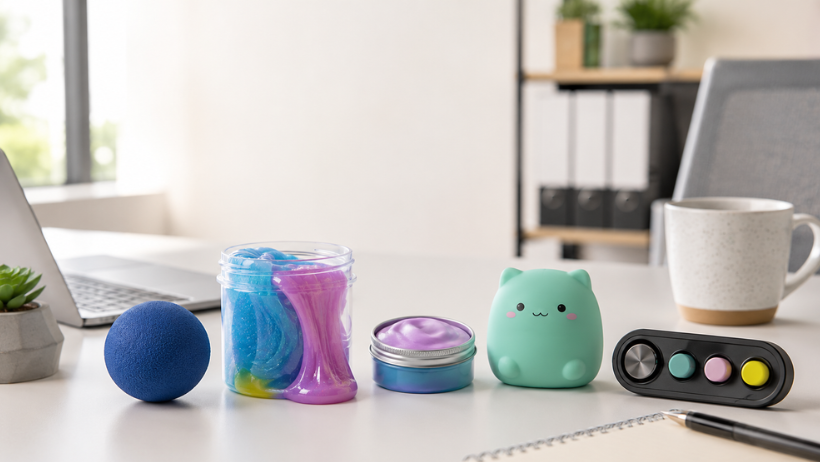
Slime vs. Stress Balls: What Makes It Different?
The custom stress ball is familiar. That is part of its strength. But familiarity can also make it easier to ignore. Slime feels newer, more playful, and more unexpected.
A stress ball is usually a passive desk item. Someone may squeeze it now and then, but the experience is limited. Slime is more interactive. It invites people to open the container and engage with it. This gives the brand more room to create a theme.
For example, a company could create:
A blue “Focus Flow” slime for a productivity campaign.
A green “Reset Slime” for an employee wellness initiative.
A glitter slime for a creative agency event.
A glow-in-the-dark slime for a tech conference.
A color-matched slime kit for a brand activation.
A small slime jar inside a new hire welcome kit.
This is where slime becomes more than a novelty. It becomes a branded experience.
It also photographs and films well. Slime has built-in visual appeal because it moves, stretches, and changes shape. That makes it useful for social media giveaways, event reels, unboxing videos, and behind-the-scenes campaign content. A traditional stress ball can show a logo. Slime can show motion, texture, color, and interaction.
The Rise of Sensory Promotional Products
The popularity of slime is part of a bigger movement. People are drawn to products that feel good to use. This includes fidget toys, sensory putty, squishy toys, pop fidgets, textured desk accessories, and other tactile items.
This matters for promotional marketing because branded products are no longer just about visibility. They are about usefulness, emotional connection, and experience. A good promotional product should answer a simple question: will the recipient actually want to keep this?
Sensory products have an advantage because they give people a reason to interact with the brand repeatedly. A notebook may be used during meetings. A tumbler may be used every morning. A desk toy may be picked up during stressful moments, brainstorming sessions, or quick breaks.
That repeated interaction helps keep the brand visible.
Slime also works because it feels less corporate. That can be a good thing. In a world full of polished emails, digital ads, and formal sales messages, a playful product can make a brand feel more human. It can soften the tone of a campaign and make the recipient smile.
This is especially useful for HR, internal culture, and event marketing. A branded slime jar can say, “Take a break,” “Reset your day,” or “Thanks for being part of the team” in a way that feels lighter than another branded notebook or water bottle.
How Brands Can Use Slime Without Making It Feel Gimmicky
The biggest risk with slime is that it can feel too childish if the branding is not handled carefully. The solution is to make the product intentional.
Start with the campaign message. Is the goal stress relief? Creativity? Focus? Team appreciation? Event engagement? Once the purpose is clear, the slime can be designed around that message.
For a wellness campaign, choose calming colors, subtle branding, and copy like “Take five” or “Reset your desk.”
For a creative agency, use bold colors, glitter, or layered slime with a message about ideas, motion, and imagination.
For a conference, create a limited-edition slime jar with the event name, date, and booth number.
For employee onboarding, include slime in a welcome kit alongside a notebook, pen, tumbler, and desk accessory.
For client appreciation, use premium packaging and a playful message like “Thanks for sticking with us.”
Packaging matters. A clean label, good container, and simple message can make slime feel branded and thoughtful instead of random. The goal is not to make it look like a toy from a dollar bin. The goal is to make it feel like a fun, useful, brand-aligned desk item.
Safety and Sourcing Still Matter
Because slime and gel-based toys are handled directly, brands should be careful about sourcing. Recent reports around gel-filled sensory toys and heated squishy toys have raised safety concerns, especially when products are exposed to heat or misused due to viral online trends.
For promotional use, businesses should work with reliable suppliers, confirm product labeling, follow age guidance, and avoid cheap knockoffs that may not meet safety standards. Brands should also avoid making medical or therapeutic claims. Slime can be positioned as a fun desk toy, sensory giveaway, or playful break item, but it should not be marketed as a treatment for anxiety, ADHD, or any medical condition.
That distinction protects both the brand and the recipient.
Why Slime Belongs in the Modern Promo Mix
The classic stress ball is not going away. It still has a place in the promotional products world. But today’s audiences are ready for more variety, especially when it comes to branded desk toys and wellness giveaways.
Slime works because it combines several things brands want in a giveaway: it is tactile, customizable, colorful, fun, desk-friendly, and content-worthy. It gives recipients a small experience, not just another item. It can support campaigns around wellness, creativity, focus, appreciation, and team culture.
For offices, it offers a playful desk break.
For HR teams, it adds personality to employee kits.
For conferences, it creates a booth giveaway people will remember.
For wellness campaigns, it gives people a simple way to pause.
For brands, it creates repeated visibility in a format that feels fresh.
The best promotional products are the ones people keep, use, and remember. That is why slime deserves a place beside stress balls, squishies, putty, and fidget toys in the next generation of sensory promotional products.
It may not replace the stress ball completely.
But for brands that want something more modern, more interactive, and more memorable, slime might just be the new desk toy worth sticking with.